 Lidstein
The short answer: A non-load-bearing drywall partition (metal studs, insulation, double boarding, skimmed) costs roughly 60–120 € per m² in 2026, a suspended ceiling 50–100 €/m². The board colour tells you where it belongs: grey for living spaces, green for wet rooms, red for fire protection. And: loads for basins or TV walls are planned before boarding — not after.
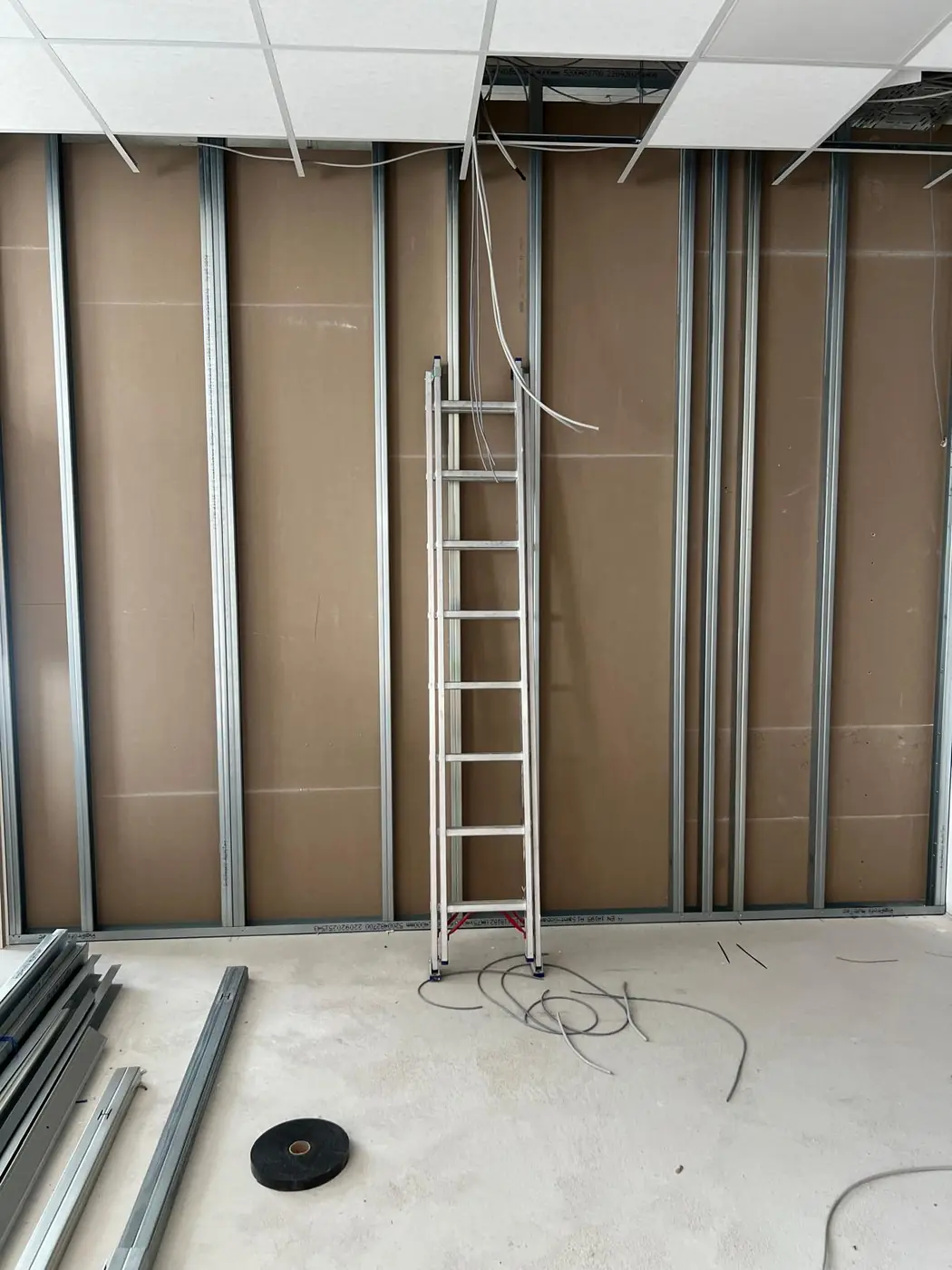
Why drywall instead of a masonry wall?
- No water on site: no drying times — carry on the next day instead of in three weeks.
- Light: around 25–50 kg/m² instead of 100–250 kg/m² for masonry — on timber floors often the only option without structural strengthening.
- Service-friendly: electrics, water and ventilation run in the cavity — no chasing.
- Precise and reversible: layouts can be changed later with modest effort — ideal within the fit-out package of a gut renovation.
What does each build-up cost?
| Build-up | Typical use | Guide price |
|---|---|---|
| Partition, single boarded | Storage, secondary rooms | 45–70 €/m² |
| Partition, double boarded + insulation | The standard for living spaces | 60–120 €/m² |
| Wall lining | Services zone, insulation against external walls | 40–80 €/m² |
| Suspended ceiling | Spots, acoustics, services level | 50–100 €/m² |
| Sloped attic boarding | Loft conversion incl. vapour barrier | 70–130 €/m² |
Guide prices from Lidstein project practice, 2026. Acoustic and fire-rated builds and curved surfaces sit above these ranges.
Which board goes where?
- Grey (standard): walls and ceilings in normal rooms.
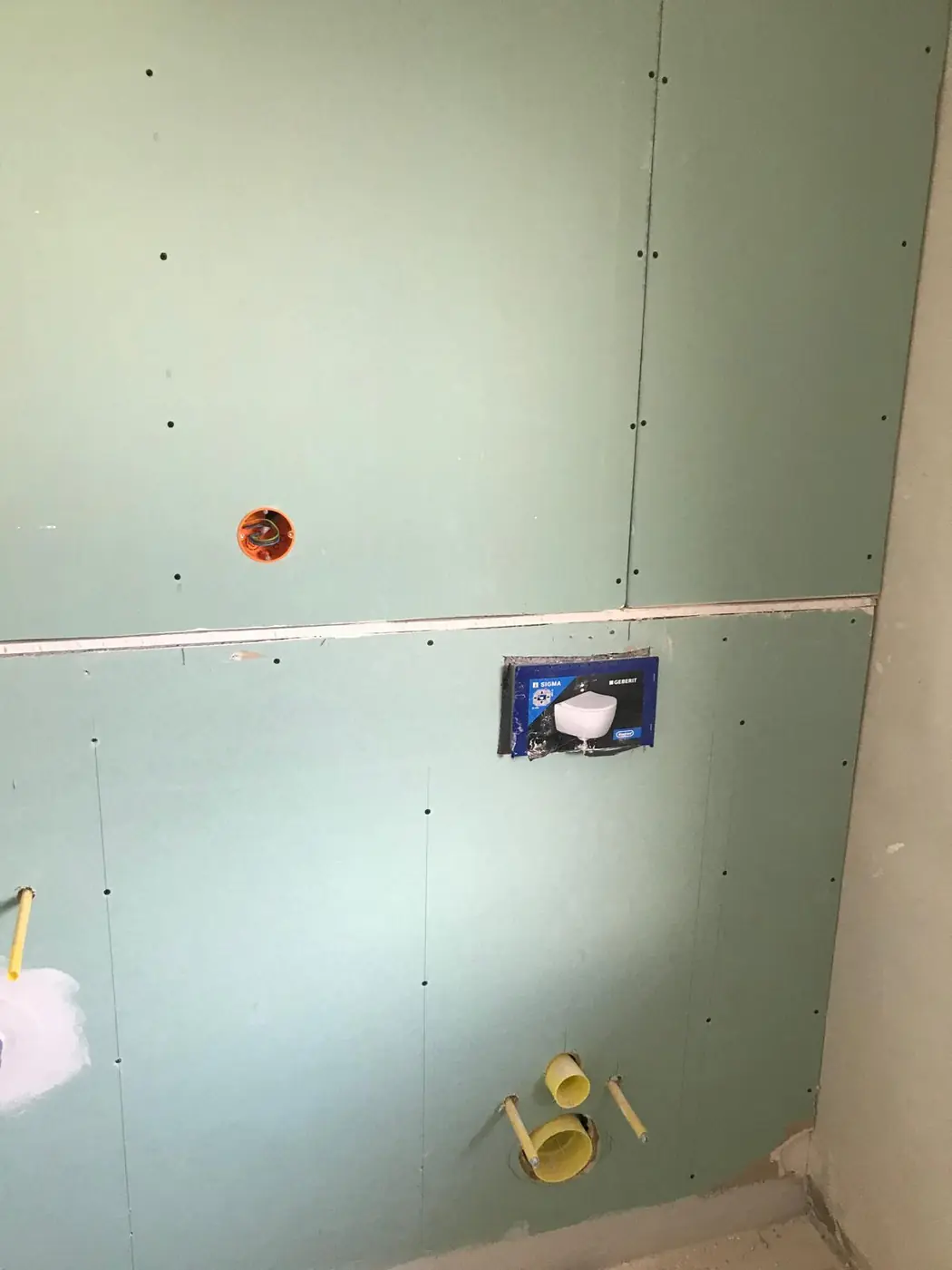
- Green (impregnated): wet rooms — mandatory behind showers and tubs, combined with bonded waterproofing under the tiles.
- Red/pink (fire board): glass-fibre-reinforced core for fire-rated walls, shafts and claddings.
- High-density acoustic boards: audibly better walls — small surcharge per board, big difference.
What really determines soundproofing?
Not wall thickness but the build-up: mass (double or high-density boarding), decoupling (separate studs, sealing tapes at junctions) and cavity insulation. A well-built 10 cm drywall partition outperforms an 11.5 cm brick wall acoustically — a badly built one transmits every conversation. The difference lies in details like continuous perimeter seals and offset socket boxes.
The mistakes you only make once
- Forgotten loads: wall-hung WCs, basins, kitchen wall units and TV mounts need traverses in the studs — retrofitting means opening the wall again.
- No finishing level agreed: without a defined Q2/Q3 finish, the handover to the painter becomes a dispute.
- Grey board in the splash zone: swells, moulds, carries no waterproofing — green plus bonded sealing is mandatory.
- Sockets back to back: the shortest path for sound — offset and back-fill the boxes.
Frequently asked questions
What does a drywall partition cost?
A non-load-bearing partition with metal studs, insulation and double boarding costs roughly 60 to 120 euros per square metre in 2026, installed and skimmed. Single boarding is cheaper; acoustic or moisture-resistant builds cost more.
What do the board colours grey, green and red mean?
Grey is the standard plasterboard for normal rooms. Green marks impregnated boards for wet rooms such as bathrooms and kitchens. Red or pink indicates fire-protection boards for fire-rated walls, shafts and claddings.
Can you hang heavy things on drywall?
Yes. Pictures and shelves hold with cavity anchors (20 to 40 kilograms per fixing depending on the anchor). Basins, wall-hung WCs and kitchen wall units need load-bearing traverses inside the stud work — planned before boarding, not after.
What do the finishing levels Q1 to Q4 mean?
Q1 is functional filling (tile backing), Q2 the standard for textured wallpaper, Q3 for fine wallpapers and matt paint, Q4 the full-surface skim for raking light and smooth design surfaces. Put the level in the contract — otherwise painter and dryliner argue later.
Rethinking your walls?
New layout, loft conversion or wall lining — send us photos and dimensions and we will tell you honestly what it costs.